- The Rod Letter
- Posts
- Why Silence Wins: A Framework for Better Decisions, Better Ideas, and Better Results
Why Silence Wins: A Framework for Better Decisions, Better Ideas, and Better Results
The mindset I use to solve problems, expand ideas, and stay sharp under pressure.

Rodrigo Roque IV
December 10, 2025
There’s a moment we all hit, the moment right before everything can go wrong.
You’re in a meeting, a conversation, or a creative flow…and something unexpected drops in your lap. A tough email. A curveball. An idea that feels too big to hold. A moment where pressure, confusion, or emotion could push you into the wrong move.
Most people panic in that space.
They rush to respond.
They speak out of emotion.
They try to fix the problem fast or chase the idea without structure, just to feel in control.
But that moment is exactly where everything can fall apart.
Because when pressure hits, your brain shifts into survival mode. And survival mode makes you reactive, not strategic.
That’s how deals slip, relationships get damaged, ideas get lost, and opportunities fade.
If you’ve ever been there, you know the spiral:
You say something you regret.
You jump into something without clarity.
You make a decision you weren’t ready for.
You overthink until the idea dies before it’s born.
A small issue becomes a wildfire.
A good idea becomes overwhelming.
And looking back won’t fix it.
So I built something for myself, a way to stay sharp under pressure, but also to stay clear when creating.
I call it P.A.S. - Pressure Activated Strategy.
When I go silent, I’m not shutting down.
I’m activating P.A.S.
I take the Problem or idea and Amplify it in my mind.
I explore every angle.
I imagine every outcome, the good, the bad, and the destructive.
I let the pressure settle until the noise dissolves and Solution slaps me in the face.
Only then do I move.
Only then do I speak.
Only then do I create.
Silence becomes strategy.
Stillness becomes clarity.
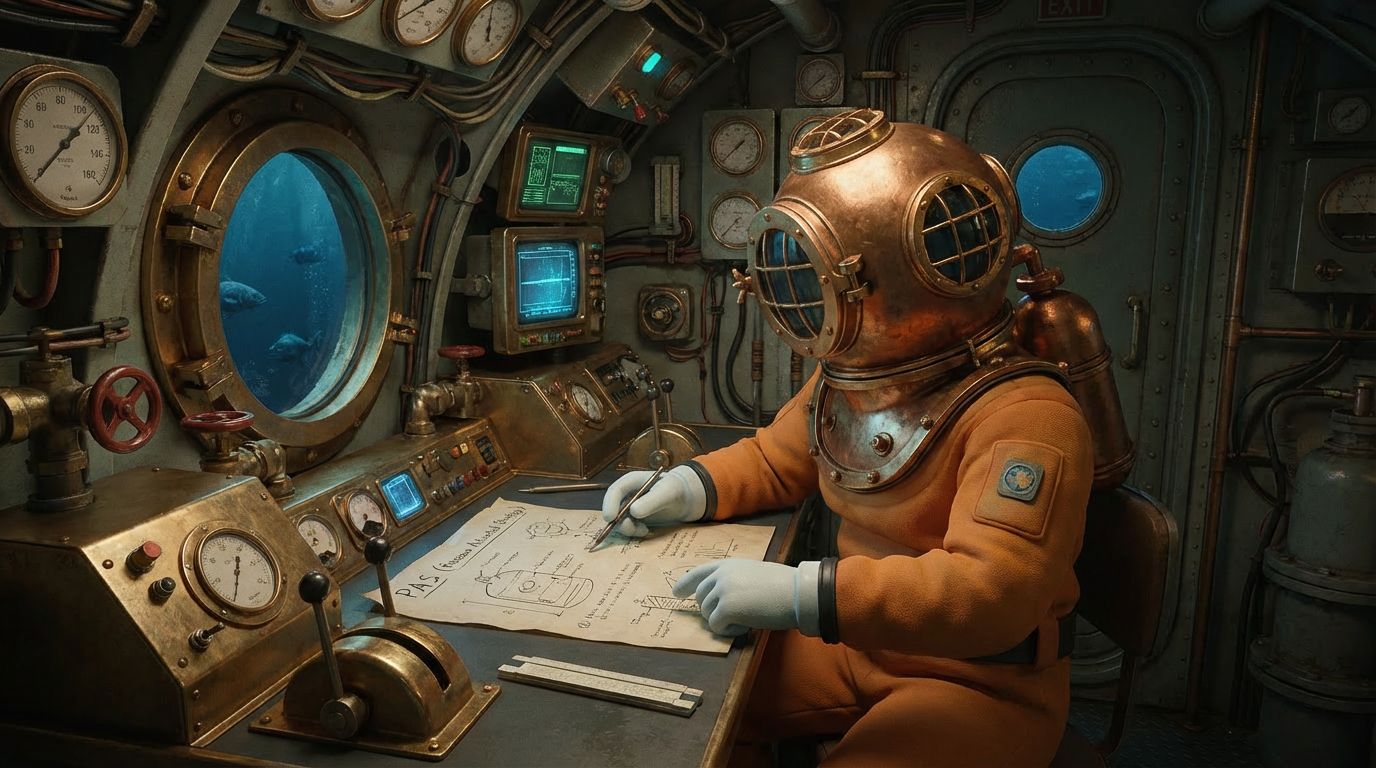
WHEN THE P.A.S. FRAMEWORK IS APPLIED
P.A.S. activates any time your next move has weight…or you just feel lost.
Business decisions.
Relationships.
Creative ideas.
Life changes.
It’s used when you can’t afford to respond emotionally or execute blindly. Helps to articulate your thoughts better.
You use P.A.S. when:
The stakes are high and you only get one shot
Emotions would blur your judgment
Pressure hits fast and clarity is needed
Overthinking starts pulling you apart
An idea feels huge, but unstructured
You need to expand, outline, and scale a concept
This is where P.A.S. becomes more than problem-solving, it becomes creative architecture.
When you have an idea, P.A.S. lets you stretch it, break it down, explore the possibilities, and fill in the gaps. You’re not reacting. You’re designing.
WHERE IT COMES FROM
I didn’t invent this mindset.
I adapted to it.
Growing up shy, low-confidence, and always observing from the outside, silence became my first teacher.
I didn’t talk much.
I didn’t trust my voice.
So I learned to study everything, the moods, the energy, the risks, the timing.
When you don’t feel confident, you become mindful.
When you’re shy, you become a listener.
When you have low self-esteem, you become intentional because every move feels like it matters.
That version of me didn’t know it then, but he was building P.A.S. long before I named it.
Today, it’s the reason I can create, solve, write, film, build ideas, and move through pressure without breaking.
P.A.S. isn’t something I made up.
It’s something I grew into.
If I’m silent, I’m strategizing and when I finally speak?
It’s already solved or ready to take action.

HOW P.A.S. ACTUALLY WORKS (WITH REAL EXAMPLES)
P.A.S. isn’t overthinking, it’s structured thinking.
Here’s how each step works, with real-world scenarios:
1. Identify the real problem
Most problems look loud on the surface but quiet underneath.
P.A.S. forces you to slow down and find the real issue.
Example:
A client pushes back on pricing.
The surface problem looks like: “They think it’s too expensive.”
The real problem might be:
– You didn’t show the value clearly
– They’re comparing you to something else
– They don’t understand the deliverables
– They need more trust before committing
When you find the real cause, you fix the real problem.
In relationships:
They say “You don’t listen.”
The real issue might be timing, stress, or feeling unheard not the words being said.
In creativity:
“I’m stuck” isn’t the real problem.
The real problem is: “I don’t know which piece of the idea to start with.”
2. Amplify the outcomes (worst & best)
You look at both directions so you’re not acting from emotion.
Worst case example:
You take a project you're unsure about and you waste time, lose energy, miss better opportunities.
Best case example:
You say yes to the right client and that one project leads to three more and sets your brand tone.
In relationships:
Worst case: reacting out of frustration makes the situation worse.
Best case: pausing gives you the clarity to respond in a way that actually helps.
In creativity/business:
Worst case: rushing an idea leads to unclear execution.
Best case: taking time gives the idea shape and direction.
This step is perspective, not panic.
3. Build the solution with real information
Not emotions.
Not assumptions.
Not pressure.
Example:
You want to raise your rates.
Instead of guessing, you gather real info:
– What similar creators charge
– What your results have been
– The time/energy the work requires
– What clients actually value most
Now your decision is grounded, not emotional.
In creativity:
You break the idea down into parts you can execute today instead of drowning in the whole thing.
In relationships:
You respond based on what was actually said, not what you feared was said.
4. If you don’t have enough information, don’t make the decision
This is where P.A.S. protects you most.
Example:
A business opportunity sounds exciting, but you don’t know:
– the time commitment
– the financial details
– expectations
– the long-term impact
Most people say yes too quickly.
P.A.S. says: pause until you have what you need.
In relationships:
Before reacting to a text, a comment, or a tone, you pause until you know what’s really happening.
In creativity:
If you don’t understand the full scope of a project, you don’t jump in blindly.
P.A.S. gives you the space to think clearly, so you can say the right thing, build the right idea, or make the right move.
If you're a founder or creative who wants clarity, structure, and strategy in your story or content…send me a DM or an email. Let’s build something with intention.

👉 Book a consultation or join Relion University today: Relion University
Until next time! - Rodrigo